Sonja Coertze and Elaine Basson (Plant Disease Clinic Stellenbosch, Department of Plant Pathology) were invited to attend the National Biosecurity Summit, held on 10–11 June 2025 at the University of Pretoria’s Hatfield campus. The theme of the summit was “Collaborative Actions for Food Security and Trade”, and it brought together representatives from government, research institutions, and industry, with a focus on both plant and animal health.
The summit coincided with a period in which South Africa is grappling with several animal disease outbreaks—including foot-and-mouth disease, avian influenza, and African swine fever—as well as newly reported plant diseases such as Goss’s wilt of maize (Clavibacter nebraskensis) and Phytophthora palmivora on various hosts (commonly referred to as Phytophthora palm bud rot).
The first day of the program featured an insightful and engaging keynote address by Prof. Andrew Robinson from the Centre of Excellence for Biosecurity Risk Analysis (CEBRA) at the University of Melbourne. His talk reaffirmed the importance of trust and communication among all stakeholders in the agricultural sector. Other notable speakers included Mr. Wandile Sihlobo, chief economist of the Agricultural Business Chamber of South Africa, and the Minister of Agriculture, Mr. John Steenhuisen. The afternoon concluded with a panel discussion featuring representatives from the plant and animal industries, focusing on collaborative actions for food security and trade.
The second day consisted of breakaway sessions on various topics, including:
- Public–private partnerships for biosecurity
- The national biosecurity diagnostic network
- Biosecurity education and awareness
- Market access and surveillance
During the session on the national biosecurity diagnostic network, it was reaffirmed that diagnostics are critical for protecting production, ensuring national food security, and supporting trade at local, regional, and global levels. The importance of training qualified plant pathologists and incorporating plant health and biosecurity into curricula—especially in programs where plant pathology is not currently taught—was also emphasized during the session.
The National Biosecurity Hub (NBH), launched by the South African government in 2022, focuses on three core areas:
- Research and surveillance of pests and diseases
- Development of diagnostic and quarantine services
- Training and awareness programs
The Department of Plant Pathology at Stellenbosch University aligns closely with these objectives, particularly in the domains of plant health, diagnostics, and capacity development. It remains one of the few tertiary institutions where students can major in Plant Pathology and receive hands-on training in plant diagnostics through the Plant Disease Clinic Stellenbosch (PDC). The PDC is the largest plant diagnostic clinic in the country, analysing more than 1000 diagnostic samples annually from any crop type. The department of Plant Pathology and the PDC actively collaborates with key agricultural industries such as CRI, Hortgro, Wine SA, Berries ZA, GrainSA, and international organizations like the FAO. Through these interactions they are already playing a vital role in strengthening South Africa’s national biosecurity framework, especially through surveillance work.
It is increasingly important that Stellenbosch University and the Department of Plant Pathology strengthen their association with the National Department of Agriculture (NDA) and NBH, particularly to support and enhance biosecurity efforts in the southern regions of South Africa. Therefore, the Faculty of AgriSciences and the Department of Plant Pathology have recently started engagements with these entities. Partnerships with NDA and NBH will enable valuable knowledge exchange, secure funding, and support the implementation of effective biosecurity measures.
This National Biosecurity Summit underscored the vital role of biosecurity in the agricultural sector and the collaborative steps needed across government, research institutions, and industry to safeguard South Africa’s food systems.
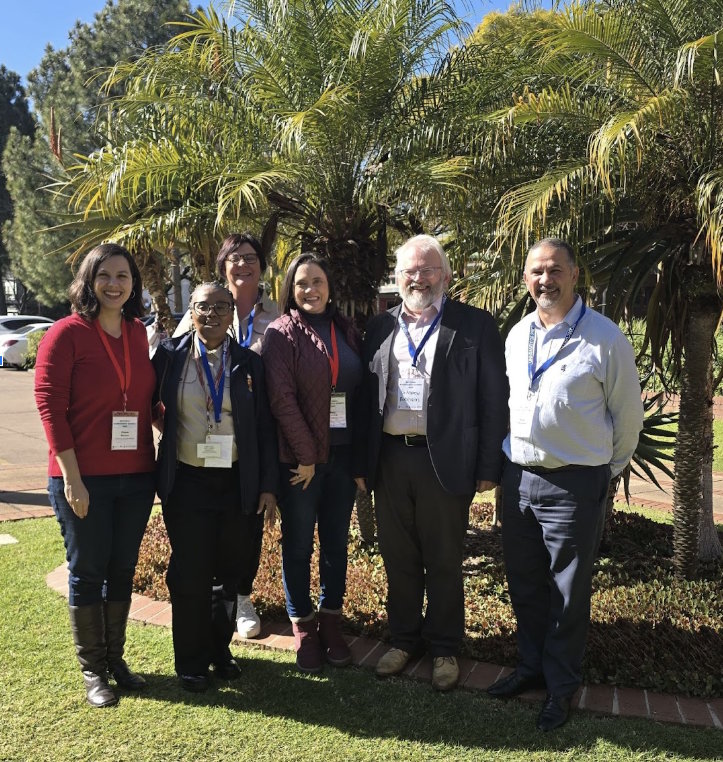 (From left to right)
Elaine Basson – Diagnostician, Plant Disease Clinic (PDC), Department of Plant Pathology
Dr. Marinda Visser – Director of Strategic Projects and Partnerships in Agriculture at UP’s Innovation Africa; Coordinator of the National Biosecurity Hub
Isabella Bezuidenhout – Biosecurity and Phytosanitary Specialist, National Biosecurity Hub
Sonja Coertze – Manager, Plant Disease Clinic (PDC), Department of Plant Pathology
Prof. Andrew Robinson – Centre of Excellence for Biosecurity Risk Analysis (CEBRA), University of Melbourne
Nolan Africander– Deputy Director Plant Quarantine and Diagnostic Services, National Department of Agriculture
Plantsiektekliniekwoon die Nasionale Biosekuriteitsberaad in Pretoria by
Sonja CoertzeenElaine Basson(Plantsiektekliniek Stellenbosch, Departement Plantpatologie) is genooi om dieNasionale Biosekuriteitsberaadby te woon, wat op10–11 Junie 2025 by dieHatfield-kampus, van die Universiteit van Pretoria, gehou is. Die tema van die beraad was”Samewerkende Aksies vir Voedselveiligheid en Handel”, en het verteenwoordigers van die regering, navorsingsinstellings en bedrywe byeengebring, met ’n fokus op beideplant- en diergesondheid.
Die beraad het saamgeval met ’n tydperk waarin Suid-Afrika sukkel met verskeie uitbrake van dieresiektes—insluitendbek-en-klouseer,voëlgriep, enAfrika varkgriep —asook nuutgerapporteerde plantsiektes soosGoss’s verwelking van mielies(Clavibacter nebraskensis) enPhytophthora palmivoraop verskeie gasheerplante (algemeen bekend asPhytophthora palmknopvrot).
Die eerste dag van die program het ’n insiggewende en boeiende hoofrede deurProf. Andrew Robinsonvan dieSentrum vir Uitnemendheid in Biosekuriteitsrisiko-analise (CEBRA)aan die Universiteit van Melbourne ingesluit. Sy toespraak het die belangrikheid vanvertroue en kommunikasietussen alle belanghebbendes in die landbousektor bevestig. Ander noemenswaardige sprekers wasmnr. Wandile Sihlobo, hoofekonoom van die Landbou-sakekamer van Suid-Afrika, en dieMinister van Landbou, mnr. John Steenhuisen. Die middag is afgesluit met ’n paneelbespreking met verteenwoordigers vanuit die plant- en dierbedrywe, met ’n fokus op samewerkende aksies vir voedselveiligheid en handel.
Die tweede dag het bestaan uitwerksessiesoor verskeie onderwerpe, insluitend:
- Openbare–private vennootskappe vir biosekuriteit
- Die nasionalebiosekuriteit-diagnostiesenetwerk
- Biosekuriteit-onderrig en -bewustheid
- Marktoegang en -monitering
Tydens die sessie oor dienasionale biosekuriteit-diagnostiese netwerkis daar bevestig datdiagnostiek van kritieke belang isom produksie te beskerm, nasionale voedselvoorsiening te verseker, en handel op plaaslike, streeks- en globale vlakke te ondersteun. Die belangrikheid van die opleiding vangekwalifiseerde plantpatoloë en die insluiting vanplantgesondheid en biosekuriteitin leerplanne—veral in programme waar plantpatologie tans nie aangebied word nie—was ook ’n belangrike punt van bespreking.
Die Nasionale Biosekuriteitshub (NBH), wat in 2022 deur die Suid-Afrikaanse regering van stapel gestuur is, fokus op drie kernareas:
- Navorsing en monitering van plae en siektes
- Ontwikkeling van diagnostiese en kwarantyndienste
- Opleidings- en bewusmakingsprogramme
Die Departement van Plantpatologie aan die Universiteit Stellenbosch belyn mooi met hierdie doelwitte, veral op die gebiede van plantgesondheid, diagnostiek en bou van kapasiteit. Dit bly een van die min tersiêre instellings waar studente in Plantpatologie kan spesialiseer en praktiese opleiding in plantdiagnostiek deur die Plantsiektekliniek Stellenbosch (PDC) kan ontvang. Die PDC is die grootste plantdiagnostiese kliniek in die land en ontleed jaarliks meer as 1000 diagnostiese monsters van enige tipe gewas.
Die Departement Plantpatologie en die PDC werk aktief saam met sleutelrolspelers in die landboubedryf soos CRI, Hortgro, Wyn SA, Berries ZA, GraanSA, en internasionale organisasies soos die FAO. Deur hierdie samewerking speel hulle reeds ’n belangrike rol in die versterking van Suid-Afrika se nasionale biosekuriteitsraamwerk, veral deur moniteringswerk.
Dit word al hoe belangriker dat die Universiteit Stellenbosch en die Departement Plantpatologie hul verbintenis met die Nasionale Departement van Landbou (NDA) en die NBH versterk, veral om biosekuriteitsinisiatiewe in die suidelike streke van Suid-Afrika te ondersteun en te verbeter. Daarom het die Fakulteit AgriWetenskappe en die Departement Plantpatologie onlangs met hierdie entiteite in gesprek begin tree. Vennootskappe met die NDA en NBH sal waardevolle kennisuitruiling moontlik maak, befondsing verseker, en die implementering van doeltreffende biosekuriteitsmaatreëls ondersteun.
Die Nationale Biosekuriteitsberaad het dienoodsaaklike rol van biosekuriteit in die landbousektorbeklemtoon, asook diesamewerkende stappe wat tussen regering, navorsingsinstellings en die bedryfnodig is om Suid-Afrika se voedselstelsels te beskerm.
Van links na regs:
Elaine Basson– Diagnostikus, Plantsiektekliniek (PDC), Departement Plantpatologie
Dr. Marinda Visser– Direkteur van Strategiese Projekte en Vennootskappe in Landbou by UP se Innovation Africa; Koördineerder van die Nasionale Biosekuriteitshub
Isabella Bezuidenhout– Biosekuriteit- en Fitosanitêre Spesialis, Nasionale Biosekuriteitshub
Sonja Coertze– Bestuurder, Plantsiektekliniek (PDC), Departement Plantpatologie
Prof. Andrew Robinson– Sentrum vir Uitnemendheid in Biosekuriteitsrisiko-analise (CEBRA), Universiteit van Melbourne, Australië
Nolan Africander– Adjunkdirekteur: Plantkwarantyn en Diagnostiese Dienste, Nasionale Departement van Landbou.



 Front row: (L-R): Dr Burger, Prof Oberholser, Cecile Bester, Mandisa Shabalala, Lezaan Hess, Mariana van Deventer and Dr Rose

